


Why Choose Us
Pre-sale Service
Our company can provide 24-hour service to discuss product parameters, prices, delivery dates, transportation and other details with customers.
Quality Solution
If it is confirmed that the quality loss is caused by us, we will reissue the unqualified product or make a cash compensation.
Our History
Was established in 2006, located in Cangzhou City, Hebei Province, China. We have more than ten years of export business experience.
Production Market
Our company's business covers the Middle East, North Africa, South America, Southeast Asia, Central America and other regions, with an annual export value of more than 10 million US dollars.
Low temperature steel pipe is medium carbon structural steel, cold and hot plus low temperature steel pipe can be good, good mechanical properties, and low price, wide source, so it is widely used. Its biggest weakness is low hardenability, large section size and relatively high requirements of the workpiece should not be used.

ASTM A213 T12 alloy steel tube can be used for superheater tubes. The role of superheater tubes is to absorb heat. The seamless boiler steel tubes or heat-resistant alloy steel tubes are bent into a snake shape, and the two ends are respectively welded to the inlet and outlet headers. When the superheater tube is in operation, the outside is affected by high-temperature flue gas, and the inside is circulated by high-pressure steam.

ASTM A213 T22 alloy steel tubes can be used for heat exchangers. The heat exchange tube is one of the elements of the heat exchanger, placed inside the cylinder to facilitate heat exchange between two media. It exhibits high thermal conductivity and good isothermal properties, enabling rapid and nearly lossless thermal energy transfer, earning it the moniker of a heat transfer superconductor, with thermal conductivity thousands of times greater than copper.

ASTM A335 P5 Alloy Steel Pipe is primarily used for heating surface tubes of low and medium pressure boilers (working pressure generally not exceeding 5.88 MPa, working temperature below 450°C), and for high-pressure boilers (working pressure generally above 9.8 MPa, working temperature from 450°C to 650°C). They are also used in heating surface pipes, economizers, superheaters, reheaters, and in the petrochemical industry.

ASTM A335 P9 Alloy Steel Pipes are mainly used for high temperature service, not easy to deform, not easy to break. The content of chromium and molybdenum elements in the steel pipes produced by our company fully meet the standard requirements, with good mechanical properties and stable use in high temperature environments. The sold steel pipes have never appeared Had a safety accident.

This ASTM A335 specification covers nominal wall and minimum wall seamless ferritic alloy-steel pipe intended for high-temperature service. Pipe ordered to this specification shall be suitable for bending, flanging, and similar forming operations, as well as fusion welding. Selection will depend upon design, service conditions, mechanical properties, and high-temperature characteristics.

ASTM A335 P12 alloy steel pipes are mainly used for manufacturing steam boilers and steam pipelines. Our factory has implemented thorough Process Quality Management that covers the entire metallurgical process, including iron making, steel making, continuous casting, slabbing, tube rolling, heat treatment, tube processing, etc. We have comprehensive capabilities in process planning, quality control, continuous improvement, and quick response.

Alloy seamless steel pipe contains more Cr elements, providing it with characteristics such as high temperature resistance, low temperature resistance, and corrosion resistance. It is widely used in boiler tubes, heat exchanger tubes, superheater tubes, economizer tubes, reheater tubes, high temperature and high pressure pipes, as well as low temperature pipes.
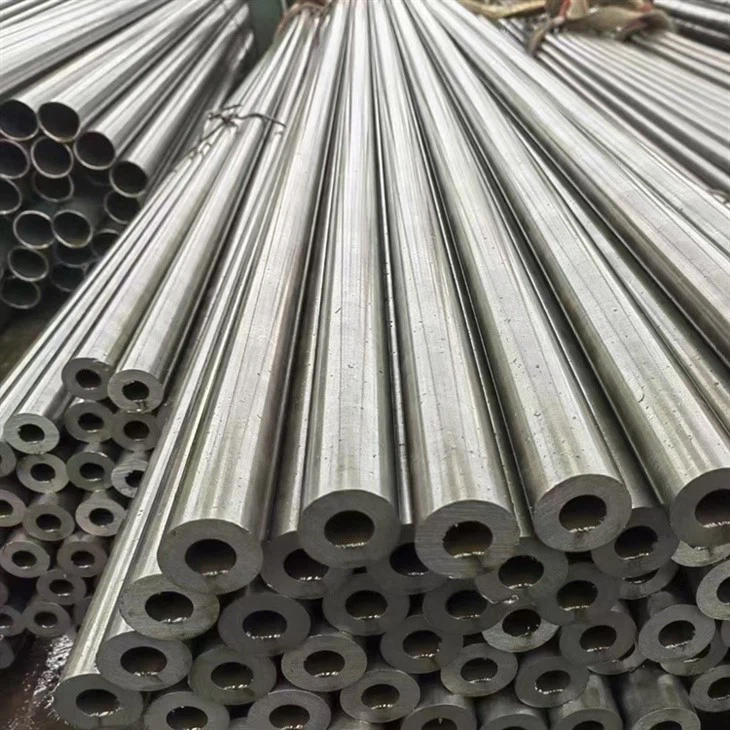
Alloy seamless steel pipe contains more Cr elements, giving it characteristics such as high temperature resistance, low temperature resistance, and corrosion resistance. It finds wide application in boiler tubes, heat exchanger tubes, superheater tubes, economizer tubes, reheater tubes, high temperature and high pressure pipes, as well as low temperature pipes.

Alloy seamless steel pipe contains more Cr elements, so it has the characteristics of high temperature resistance, low temperature resistance, and corrosion resistance. It is widely used in boiler tubes, heat exchanger tubes, superheater tubes, economizer tubes, reheater tubes, high temperature and high pressure pipes, low temperature pipes, etc.
As the name implies, low temperature steel pipe is the steel pipe with a good low temperature resistance and used for in low temperature applications, generally refers to the alloy steel pipe used below -10℃ and has enough toughness. Usually, we refer the steel pipe used at -10 ~ -196℃ as low temperature steel and below -196℃ as cryogenic steel pipe or ultra-low temperature steel pipe. It is generally believed that manganese, nickel and other elements can improve the toughness at low temperature. Experiments showed that with the increase of nickel content by 1%, the critical transition temperature of brittleness can be reduced by about 20℃.
According to the crystal lattice structure, low temp steel tubes can be divided into body-centered cubic Ferrite low temperature steel and face-centered cubic Austenite low temperature steel. Ferritic steel at low temperature is obvious ductile to the brittle transition temperature when the temperature reduced sharply to a critical value (or range), the toughness decline suddenly, so the steel pipe should not be used below the transition temperature, by adding alloy elements such as Mn, Ni to reduce the interstitial impurity, refine the grain size, control the size, shape and distribution of the second phase in steel, etc., making the ferritic ductile to brittle transition temperature reduced (see metal reinforcement).
Low-temp steel pipe has good strength and toughness at low temperatures, excellent processing performance and corrosion resistance, etc. There is no brittle transition temperature in the low temperature range of Austenitic cryogenic pipe, and it can be used generally without verifying its low temperature impact toughness. Ferritic low temperature steel is the most commonly used pipe material. The heat treatment process affects the microstructure and grain size of low temperature steel, especially the low temperature toughness, which is improved obviously after quenching and tempering. It is divided according to the composition:
Low carbon Mn steel
It contains 0.05 ~ 0.28% C and 0.6 ~ 2%Mn. Making Mn/C≈10 to reduce O, N, S, P and other harmful impurities, or added a small amount of Al, Nb, Ti, V and other elements to refine the grain. The lowest service temperature of this kind of steel is about -60℃.
Low alloy steel
It mainly includes low Nickel steel(2-4% Ni), Mn-Ni-Mo steel( 0.6 ~ 1.5%Mn, Ni0.2 ~ 1.0%, 0.4 ~ 0.6%Mo ,C≤ 0.25%, Ni-Cr-Mo steel(0.7 ~ 3.0%Ni, 0.4 ~ 2.0%Cr, 0.2 ~ 0.6%Mo, C≤ 0.25%). The lowest working temperature can be low to -110℃ or so.
Medium (high) alloy steel
There are mainly 6% Ni steel, 9% Ni steel, 36% Ni steel, of which 9% Ni steel is widely used for cryogenic steel. Its operating temperature can be as low as -196℃.
ASTM A333, JISG3460, EN10216-4 and other standards specified the details of Ferritic cryogenic steel tubes, of which ASTM A333 Gr.3, Gr.6, Gr.8 and Gr.11 are the most commonly used cryogenic tubes grades. Low-temperature steel pipe has wide uses, like production of ethylene, propylene, urea, ammonia, compound fertilizers such as washing, purification, desulfurization, degreasing and other process equipment and for the pharmaceutical industry, and cryogenic equipment manufacturing, ultra-low temperature cold storage, the transmission of cryogenic liquefied gas pipe and tube components, liquefied petroleum gas (LPG) cryogenic separation equipment, air separation equipment, etc.
The Role Of Low Temperature Steel Pipes
Low-temperature steel pipe is a type of steel with special properties. It is developed on the basis of carbon structural steel. Due to its unique corrosion resistance and good mechanical properties, it is mainly used as pipelines for petroleum, chemical and other equipment and equipment. pieces.
The Function Of Low Temperature Steel Pipe:
1. The insulation layer of low-temperature pipelines is made of rigid polyurethane foam.
2. Submerged arc welded straight seam pipes can produce pipelines with a length of 9 meters under all bending conditions;
3. The strength of spiral welded pipes is generally higher than that of straight seam welded pipes, and welded pipes with larger diameters can be produced from narrower blanks;
4. Welding technology that is easy to straighten (such as lfjtwb and xr-iii type).
5. Steel plate rolling machines can be used for continuous hot bending.
6. Large-diameter seamless steel pipes rolled with large diameters and thick walls improve the accuracy level due to the reduction of internal and external burrs.
7. Steel pipes made of high-quality strips or wires that are rolled and welded can be used for a long time in the temperature range of -40--60°C without deformation.
8. It plays an important role in manufacturing ordinary low-alloy structural steel, high-strength low-alloy structural steel and stainless steel.
9. Other methods of external anti-corrosion and internal anti-corrosion are available as needed.
10. Socket-type connection is an updated product of the traditional connection method, making installation faster and more convenient.
11. Because this product has high surface finish and is easy to process, it is widely used in various steel structure construction fields.
Advantages of Low Temperature Steel Pipe


Strength
Steel is an essential material in most industrial applications due to its strength and longevity. But there are various types of steel available, each with distinct properties that may determine their suitability for certain industries. All steel products - such as pipes and fittings - undergo testing to guarantee they perform reliably in field use. This enables engineers and designers to determine the ideal constructions for their specific requirements. Carbon steel is the most common type of steel pipe due to its durability and resistance to corrosion. However, other steel pipes may be better suited for certain applications.
One such option is Low Temperature Carbon Steel Pipe, commonly referred to as LTCS pipe. This type of steel is ideal for applications where temperatures are too low for other steel types to function properly. Crafted from an alloy with high levels of carbon and other elements, can withstand temperatures down to 50 degrees Fahrenheit without damage.
Durability
Carbon steel pipe is a strong and reliable material commonly used in piping projects. It can be made from various alloys at cost-effective prices for industrial uses.
Steel pipe strength is determined by its yield strength, tensile strength, hardness and ductility. Furthermore, the thickness and inside wall condition of a pipe also influence these properties.Low Temperature Carbon Steel Pipe (LTCS pipe) is a type of steel specifically designed for cold environments. This pipe type is commonly employed in water and wastewater systems. Pipe of this type is highly durable and resistant to weathering for extended periods. Furthermore, it does not corrode like other materials do.
Corrosion Resistance
Carbon steel pipe is a popular material for water supply and gas transport piping due to its higher corrosion resistance than other metal types. As such, carbon steel pipe makes an ideal choice for these applications.
However, iron oxide (rust) can form on the surface of carbon steel when exposed to oxygen. As such, carbon steel pipes often have a protective coating applied.
A black mill lacquer, varnish, fusion-bonded epoxy or water-based rust inhibitor are all viable treatments to protect carbon steel from corrosion and extend its usefulness.
Low Temperature Carbon Steel Pipe offers several advantages over other steel pipes, including its ability to withstand colder temperatures than other steel types and its cost effectiveness in areas with corrosive fluids. Furthermore, this material is more cost-effective than other metal pipe materials for large projects.
Flexibility
Flexibility is an important factor to take into account when selecting a pipe. Make sure that the material can be readily rolled, formed or welded into various shapes and sizes. Carbon steel is a popular material for piping due to its flexibility to bend or flex without breaking under high pressures. This makes it suitable for transporting fluids such as water, sewage and oil.
Low Temperature Carbon Steel Pipe has the same properties as stainless steel but with a lower carbon content. It finds applications across various industrial fields due to its strength to withstand high pressure conditions and can be formed into various shapes and sizes using rolling, forging or welding processes.
Determine The Required Temperature Range Of Low Temperature Steel Pipe
The first and foremost thing you should consider in selecting a low-temperature carbon steel pipe is determining the temperature range at which your pipeline will operate. This will help you choose the proper grade, wall thickness, and pipe size. LTCS has a typical temperature range of -50 °C to 100°C. However, if the operating temperature goes below this range, you may have to switch to austenitic stainless steel for better performance.
Material Selection
Low-temperature carbon steel is broadly classified into two grades, namely Grade 1 and Grade 3. Grade 1 is the most commonly used material due to its good strength and toughness properties at a low temperature. Meanwhile, Grade 3 is often used for service temperatures below 50°C. Regarding material selection, you should consider the process conditions, the temperature range, and the corrosion factors, among others.
Pipe Manufacturing Standards
The pipe manufacturing standards are vital in selecting the right low-temperature carbon pipe. ASTM A333 is a well-known specification covering seamless and welded pipe manufacturing. This specification provides the chemical and mechanical properties of the Grade 1 and Grade 3 low-temperature carbon steel pipes. It also covers additional requirements like nondestructive testing and heat treatment.
Wall Thickness And Pipe Size
The wall thickness and pipe size are important factors in selecting the right low-temperature carbon steel pipe. The wall thickness should be thick enough to prevent fracture or damage due to low temperatures. The pipe size should be chosen based on the flow rates, the viscosity of the fluids, and the process requirements. Larger diameter pipes may be required to reduce pressure drop, while smaller pipes may improve fluid flow.
Corrosion Resistance
Corrosion is a common problem in pipes that can reduce lifespan and efficiency. Low-temperature carbon steel pipes are also prone to corrosion, and their suitability for a specific application must be evaluated based on their corrosion resistance properties. Surface coatings and linings are often used to increase the corrosion resistance of the pipes.
Certifications


Our Factory
Our company's business covers the Middle East, North Africa, South America, Southeast Asia, Central America and other regions, with an annual export value of more than 10 million US dollars.
FAQ
Hot Tags: low temperature steel pipe, China low temperature steel pipe manufacturers, suppliers, factory, sa335 pipe, TP304 Stainless Steel Pipe, stainless steel u pipe, TP304H Stainless Steel Tube, stainless steel precision tube, A333 Gr 6 Steel Pipe