


Why Choose Us
Pre-sale Service
Our company can provide 24-hour service to discuss product parameters, prices, delivery dates, transportation and other details with customers.
Quality Solution
If it is confirmed that the quality loss is caused by us, we will reissue the unqualified product or make a cash compensation.
Our History
Was established in 2006, located in Cangzhou City, Hebei Province, China. We have more than ten years of export business experience.
Production Market
Our company's business covers the Middle East, North Africa, South America, Southeast Asia, Central America and other regions, with an annual export value of more than 10 million US dollars.
Alloy steel boiler tubes are metal tubes used in boilers to heat water into steam. They are made from a variety of chemical elements, including nickel, chromium, molybdenum, silicon, and boron. Alloy steel boiler tubes are known for their excellent corrosion resistance, strength, durability, and weldability.

ASTM A213 T12 alloy steel tube can be used for superheater tubes. The role of superheater tubes is to absorb heat. The seamless boiler steel tubes or heat-resistant alloy steel tubes are bent into a snake shape, and the two ends are respectively welded to the inlet and outlet headers. When the superheater tube is in operation, the outside is affected by high-temperature flue gas, and the inside is circulated by high-pressure steam.

ASTM A213 T22 alloy steel tubes can be used for heat exchangers. The heat exchange tube is one of the elements of the heat exchanger, placed inside the cylinder to facilitate heat exchange between two media. It exhibits high thermal conductivity and good isothermal properties, enabling rapid and nearly lossless thermal energy transfer, earning it the moniker of a heat transfer superconductor, with thermal conductivity thousands of times greater than copper.

ASTM A335 P5 Alloy Steel Pipe is primarily used for heating surface tubes of low and medium pressure boilers (working pressure generally not exceeding 5.88 MPa, working temperature below 450°C), and for high-pressure boilers (working pressure generally above 9.8 MPa, working temperature from 450°C to 650°C). They are also used in heating surface pipes, economizers, superheaters, reheaters, and in the petrochemical industry.

ASTM A335 P9 Alloy Steel Pipes are mainly used for high temperature service, not easy to deform, not easy to break. The content of chromium and molybdenum elements in the steel pipes produced by our company fully meet the standard requirements, with good mechanical properties and stable use in high temperature environments. The sold steel pipes have never appeared Had a safety accident.

This ASTM A335 specification covers nominal wall and minimum wall seamless ferritic alloy-steel pipe intended for high-temperature service. Pipe ordered to this specification shall be suitable for bending, flanging, and similar forming operations, as well as fusion welding. Selection will depend upon design, service conditions, mechanical properties, and high-temperature characteristics.

ASTM A335 P12 alloy steel pipes are mainly used for manufacturing steam boilers and steam pipelines. Our factory has implemented thorough Process Quality Management that covers the entire metallurgical process, including iron making, steel making, continuous casting, slabbing, tube rolling, heat treatment, tube processing, etc. We have comprehensive capabilities in process planning, quality control, continuous improvement, and quick response.

Alloy seamless steel pipe contains more Cr elements, providing it with characteristics such as high temperature resistance, low temperature resistance, and corrosion resistance. It is widely used in boiler tubes, heat exchanger tubes, superheater tubes, economizer tubes, reheater tubes, high temperature and high pressure pipes, as well as low temperature pipes.
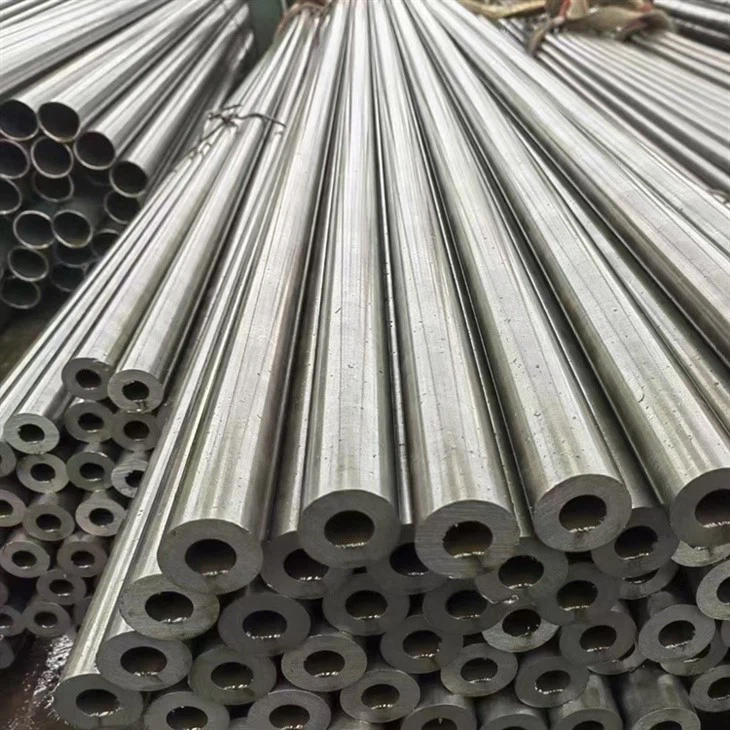
Alloy seamless steel pipe contains more Cr elements, giving it characteristics such as high temperature resistance, low temperature resistance, and corrosion resistance. It finds wide application in boiler tubes, heat exchanger tubes, superheater tubes, economizer tubes, reheater tubes, high temperature and high pressure pipes, as well as low temperature pipes.

Alloy seamless steel pipe contains more Cr elements, so it has the characteristics of high temperature resistance, low temperature resistance, and corrosion resistance. It is widely used in boiler tubes, heat exchanger tubes, superheater tubes, economizer tubes, reheater tubes, high temperature and high pressure pipes, low temperature pipes, etc.
Boiler Tubes are metal tubes that heat water within boilers to create steam. Two main tube boiler types exist water-tube boilers and fire-tube boilers. Water circulates inside the tubes of water-tube boilers and is heated externally by furnace-generated hot gasses. Hot gas passes through one or many tubes with fire-tube boilers which heat the water around them by thermal conduction. Boiler tubes are used as part of electricity production equipment such as boilers, super-heaters for coal, steam pipes and surrounding appliances.
Many components are alloyed to create Alloy Steel Boiler Tubes. It exhibits amazing mechanical properties. Alloy steel Boiler tubes are a standard version of Steel Boiler tubes comprising a variety of other important chemical elements. Some of the common alloys used to produce the Alloy Steel T5 Boiler Tubes are elements such as nickel, chromium, molybdenum, silicon, and boron. The Alloy Steel Boiler Tubes provide an outstanding quality, which includes excellent corrosion resistance, good strength, improved longevity, and fast weldability. Owing to its excellent power of resistance, various industries prefer to use Alloy steel type in manufacturing boilers.
Alloy Steel Water-tube boilers
A water-tube boiler with high pressure is a kind of boiler in which water circulates in tubes heated externally by the gas. Inside the furnace, fuel is burned, generating hot gas that heats water in the tubes to create steam. For smaller boilers, the furnace is isolated by external cooling tubing, whereas larger service boilers depend on the water-filled tubes that make up the furnace walls to produce steam.
Using hybrid water-tube / fire-tube systems was a marginally more effective adoption. Since the firebox is the hottest part of a locomotive boiler, use of a water-tube design and a conventional fire-tube boiler as an economizer in the usual position was a good solution here.
Alloy Steel Fire-tube Boilers
A fire-tube boiler is a type of boiler where hot gasses flow from a spark through one or more tubes flowing through a sealed container of water. Through thermal conduction, the heat of the gasses is transmitted through the tube walls, heating the air and eventually steam.
This style of the boiler was used in the horizontal locomotive configuration on nearly all steam locomotives. This has a cylindrical barrel that holds the fire tubes but also an expansion to accommodate the firebox at one end. This firebox has an open foundation to provide a large area of the grate and often stretches to create a rectangular or tapered structure beyond the cylindrical container.
ASTM A335: The ASTM A335 pipe for high-temperature operation is a smooth ferritic alloy-steel pipe. The pipe ordered in compliance with this specification is suitable for bending, flanging (vanstoning), and related shaping and fusion welding operations.
EN10216-2: These Seamless steel tubes are used for pressure purposes. Steel tubes, non-alloy, and alloy, with defined elevated temperature properties.
DIN 17175: DIN 17175 seamless boiler tubes are widely used in applications such as in petroleum, boiler industry, heat conservation, chemical fibre, chemical industry, medicine, machinery, paper, mechanical equipment, refrigeration, food, energy, water, aerospace, transportation, aviation, maritime, shipbuilding, environmental protection, and boiler heat exchanger tubes.
JIS G3462: They are is usually used in heat exchangers, boilers, petroleum, chemical engineering, and other power regions end up being commonly used for higher temperature resistance or corrosion capability.

Characteristics Of Different Alloy Steel Boiler Tube Materials
Carbon Steel Boiler Tube
Carbon steel boiler tubes are a traditional boiler tube material and are widely used. Carbon steel has good processability and weldability and is widely used in medium and low pressure boilers. However, it is easy to rust in high temperature and high pressure environments and has a short service life.
Alloy steel boiler tubes
Alloy steel boiler tubes include Cr-Mo alloy steel, Cr-W alloy steel, Cr-Mo-V alloy steel, etc. Alloy steel has high oxidation resistance, corrosion resistance and heat resistance, and is more suitable for use in high-pressure and high-temperature boilers, but the price is higher.
Stainless steel boiler tubes
Stainless steel boiler tubes are widely used in high temperature, high pressure, and harsh environments due to their excellent oxidation resistance, corrosion resistance, and heat resistance. However, the price of stainless steel is also relatively high.
Due to the nature of a boiler, alloy pipes are also susceptible to high-temperature corrosion, which is another factor in choosing the right alloy pipe.
In order to stand up to harsh conditions, the material's sensitivity to oxidation on the steam-side of the boiler should be considered. As the temperature in the boiler goes up, oxide scale is generally formed more quickly and more thickly. The higher material loss lowers the thickness of the pipe's wall and boosts the stress on the pipe, which causes creep rupture.
The oxide scale leads to an insulation of the tube material, which causes the temperature of the metal to rise. Those increased heats can cause high temperature corrosion and creep rates on the flue gas side.
During service, the buildup of scale also can cause blockages where alloy steel tubes bend. Scale can erode valve seats and turbine blades, which can lower the flow of steam, causing overheating and ultimately causing the boiler to fail.
Chromium has a strong effect on the corrosive behavior of steels, and the sensitivity of the material to steam-side oxidation and fire-side corrosion is an important aspect to consider for boiler operators. For example, when sulphides are deposited on the tube's surface from high sulphur coal on the fire-side, it speeds up corrosion. When hot enough, the sulphur trioxide can eat through the protective oxide scale, forming iron and chromium-based sulphates that increase the rate of corrosion.
Boiler operators not only have to consider factors from the heat, but the condition of the water can also affect the boiler and its alloy pipes, and contribute to corrosion.
What Are The Advantages Of Alloy Steel Boiler Tube?


High Strength
Alloy Steel Boiler Tube must not only withstand high pressure and high temperature conditions, but also withstand hydraulic impact, extrusion, stretching and bending and other forces. Therefore, the boiler tube must have sufficient strength and stiffness to meet the requirements of use. The material used in the general boiler tube is high-quality seamless steel pipe or steel plate, which has high strength and toughness, and can withstand the action of various forces to ensure the safe operation of the boiler.
Corrosion resistance
Because the Alloy Steel Boiler Tube works under high temperature, high pressure and high oxygen content environment, it is easy to cause corrosion when encountering water, steam and other media. Therefore, the boiler tube must have a certain corrosion resistance. Generally using chromium, molybdenum, steel, nickel and other elements of corrosion resistance alloy steel and stainless steel materials, can effectively extend the service life of boiler tubes.
Long life
Good strength and corrosion resistance, as well as strict production inspection, mature manufacturing process and technical support, are the guarantee of long life of boiler tubes. Reasonable design and selection of boiler tube materials, strict manufacturing, installation and maintenance can extend the service life of the boiler and improve the operating efficiency of the boiler.
Wide application
As one of the core components of boiler, Alloy Steel Boiler Tube is widely used in power industry, petrochemical, pharmaceutical, metallurgy, construction, transportation and other fields, and has a huge market demand in these fields. At the same time, the development of advanced manufacturing technology and process, and the continuous introduction of new, efficient, energy-saving and environmentally friendly boiler tube products are also one of the important guarantees for the rapid development of the boiler industry.
How Alloy Steel Boiler Tube Is Manufactured?
1. The production method of the Alloy Steel Boiler Tube is roughly divided into a cross-rolling method and an extrusion method. The cross-rolling method first pierces the tube by a slanting roll and then extends it with a rolling mill. This method has a high production speed, but has high requirements on the processability of the tube blank, and is mainly suitable for the production of carbon steel and low-alloy boiler tubes.
2. The extrusion method is to pierce a tube blank or a steel ingot by a punching machine and then extrude it into a boiler tube by an extruder. This method is less efficient than the cross-rolling method and is suitable for producing a high-strength alloy boiler tube.
3. Both the cross-rolling method and the extrusion method must first heat the tube blank or the ingot, and the produced boiler tube is called a hot-rolled tube.
4. Boiler tubes produced by hot working can sometimes be cold worked as needed. There are two methods for cold working: one is cold drawn, which is to draw the boiler tube through the extruding die to make the boiler tube become thinner and longer; the other method is cold rolled.
5. The cold processing of the Alloy Steel Boiler Tube can increase the dimensional accuracy and processing finish of the boiler tube and improve the mechanical properties of the material.
Certifications


Our Factory
Our company's business covers the Middle East, North Africa, South America, Southeast Asia, Central America and other regions, with an annual export value of more than 10 million US dollars.
FAQ
Hot Tags: alloy steel boiler tube, China alloy steel boiler tube manufacturers, suppliers, factory, N04400 Nickel Alloy Steel Tube, special alloy tubing, ss pipes and tubes, stainless steel precision tube, sa213 t5 tubes, N08825 Nickel Alloy Steel Tube