





Product Description
A Comprehensive Overview of Alloy Steel Flanges
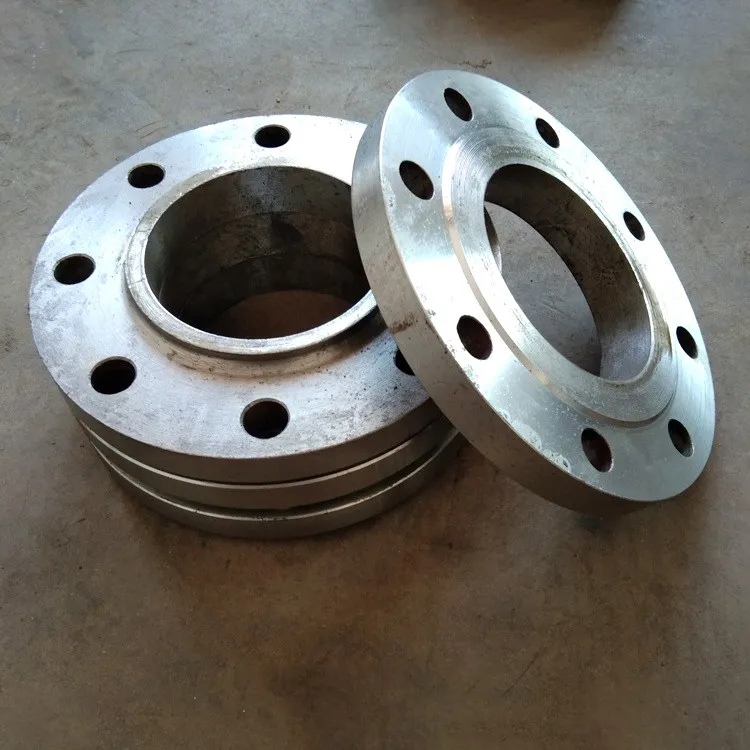
Alloy steel flanges are critical piping components manufactured from high-performance alloy steels such as 12Cr1MoV, 15CrMo, F91, F9, and F92. They serve as essential connecting elements in industrial piping systems within sectors including petroleum refining, chemical processing, nuclear power plants, and power generation. These flanges are typically produced through forging or casting processes, resulting in a dense microstructure, high mechanical strength, excellent corrosion resistance, and the ability to withstand high pressures. They are designed for reliable operation in pressure environments ranging from 2.5 MPa to 25 MPa and beyond, even under conditions involving significant temperature fluctuations and the transport of flammable or explosive media.
Material Systems and Applications
The selection of flange material is primarily determined by its service environment, generally categorized into high-temperature, low-temperature, and corrosion-resistant alloys.
1. High-Temperature Alloy Steels:
This category includes chromium-molybdenum steels and high-chromium alloy steels.
- Examples such as 15CrMo, 12Cr1MoV, ASTM A182 F11, and F22 offer good high-temperature strength, creep resistance, and oxidation resistance, making them suitable for thermal power pipelines typically operating at or below 550°C.
- More advanced high-chromium steels, like ASTM A182 F91 (9Cr-1Mo-V-Nb) and F92 (9Cr-0.5Mo-1.8W-V-Nb), are strengthened by additions of V, Nb, and W. These grades exhibit superior high-temperature persistent strength and creep rupture resistance, establishing them as core materials for ultra-supercritical power plants and high-end energy equipment, with service temperatures reaching 600°C and above.
2. Low-Temperature Alloy Steels:
These are primarily used in applications involving cryogenic media like liquefied natural gas (LNG) and liquid nitrogen, where exceptionally low-temperature impact toughness is paramount. Common grades include ASTM A350 LF2 and LF3. Materials like ASTM A522 (9% Ni steel) can be employed in extremely low-temperature environments down to -196°C, effectively preventing low-temperature brittle fracture.
3. Corrosion-Resistant Alloys:
For acidic environments (e.g., oil and gas service containing H₂S), materials must comply with standards like NACE MR0175/ISO 15156 to resist sulfide stress cracking (SSC). Common choices include low-carbon austenitic stainless steels (e.g., F316L), duplex stainless steels, or nickel-based alloys (e.g., Inconel 625).
4. Material Standards Comparison:
Beyond prevalent ASTM standards, equivalent material grades exist in European (EN), German (DIN), Japanese (JIS), and Chinese (GB/T) standards. For instance, the Chinese standard grade 12Cr1MoVG corresponds to ASTM A182 F12 Class 2. Careful attention must be paid to potential differences in chemical composition and mechanical properties across these standards during material selection.
Manufacturing Standards and Quality Control
The production of alloy steel flanges strictly adheres to internationally recognized standards, which govern their dimensions, pressure-temperature ratings, materials, and acceptance criteria.
1. Primary Product Standards:
- ASME B16.5: Covers pipe flanges and flanged fittings for NPS 1/2" to NPS 24", across 7 pressure classes (Class 150 to 2500). It is the most widely used standard in the American system.
- ASME B16.47: Applies to large-diameter steel flanges from NPS 26" to NPS 60". It is divided into Series A (MSS SP-44) and Series B (API 605).
- EN 1092-1: The European flange standard, which classifies flanges using PN ratings or Class designations. It meticulously specifies types, facing types, and material groups, making it a crucial standard for European and international projects.
- Furthermore, more specialized standards such as API 6A (for wellhead equipment), ASME III (for nuclear island components), and RCC-M (French nuclear code) apply to the oil, gas, and nuclear power industries.
2. Material and Manufacturing Processes:
High-end alloy flanges are typically manufactured through open-die forging, die forging, or ring rolling processes to ensure continuity of grain flow and microstructural density. Forging materials must conform to standards like ASTM A182 (forged alloy steel) and ASTM A350 (forgings requiring notch toughness testing).
3. Inspection and Testing:
Compliant flange products must undergo rigorous mechanical tests (tensile, impact, and hardness), non-destructive examinations (UT, MT, PT, and RT), and dimensional checks. For demanding applications, additional certifications and reports are required, such as Type 3.2 material certificates (per EN 10204), low-temperature impact test reports, and intergranular corrosion test reports.
Connection Types & Structural Features
Based on the connection method, alloy flanges are primarily classified into the following types:
- Weld Neck Flange: Connected to the pipe by welding, offering high structural integrity and suitability for high-pressure, high-temperature, and high-fatigue applications.
- Slip-On Flange: Easier to install by welding, commonly used in medium and low-pressure systems.
- Socket Weld Flange: Involves socket insertion and fillet welding, often used for small-bore piping.
- Threaded Flange: Utilizes threaded connections for easy assembly and disassembly, suitable for low-pressure applications where welding is undesirable.
- Lap Joint Flange: Used with a stub end, facilitating alignment and disassembly, ideal for systems requiring frequent maintenance.
- Blind Flange: Used to blank off pipe ends or vessel openings, providing isolation.
- Plate Flange: Features a simple flat design and lower manufacturing cost, mostly used for low-pressure and ambient temperature services.
Alloy flanges are typically connected to pipes via welding or threading. They are used in conjunction with sealing elements like spiral-wound gaskets (metal with filler) or graphite gaskets to achieve a reliable, leak-tight seal at pipe ends.
Product Specifications
Hebei Yongqiang Pipe Line Co., Ltd maintains a large inventory of alloy steel flanges year-round, including WN flange, S/O flange, Flat flange, blind flange, and more. See the table below for some specifications. In addition, our company can provide customized product services and produce various alloy steel flanges according to customers' steel grade, drawings, samples, or parameter requirements.
|
In-Stock Specifications |
||||
|
Nominal Size |
Class |
PN |
||
|
1" |
150# |
300# |
PN16 |
PN40 |
|
1 1/2" |
150# |
300# |
PN16 |
PN40 |
|
2" |
150# |
300# |
PN16 |
PN40 |
|
3" |
150# |
300# |
PN16 |
PN40 |
|
4" |
150# |
300# |
PN16 |
PN40 |
|
6" |
150# |
300# |
PN16 |
PN40 |
|
8" |
150# |
300# |
PN16 |
PN40 |
|
10" |
150# |
300# |
PN16 |
PN40 |
Alloy steel flanges are indispensable components in modern industrial piping systems. Their material selection, applicable standards, and structural design directly impact the overall safety, sealing performance, and service life of the piping network. As industrial demands evolve towards higher parameters, enhanced reliability, lighter weight, and longer service life under severe conditions (high temperature, high pressure, corrosion), flange technology continues to advance accordingly. A deep understanding of their material systems, standard specifications, and application characteristics forms the foundation for scientific design, correct selection, and the safe, stable operation of piping systems.
If you need alloy steel flanges, please feel free to contact us.
Email: johnny@yqpipeline.com
WhatsApp: +86 15632733100
Tel: +86 317 6376727
Hot Tags: alloy steel flanges, China alloy steel flanges manufacturers, suppliers, factory, f91 flange, steel blind flange